We have made it a priority to engage with broad audiences on topics of animal behaviour, animal consciousness, animal experiences, and animal aesthetics, and have done so through collaborations and exhibitions with artists and creators all over the world. Our work at the interface of art and science has resulted in a range of outputs and activities; a write-up in Nature, addresses to EU policy makers, and one of the world’s first PhD programs dedicated to Science/Art. If you’d like to know more about Alex’s involvement at the interface of Art and Science, please have a look at his ART CV at the bottom of the page. Here are some of our current projects:

You can watch an excerpt from this film here
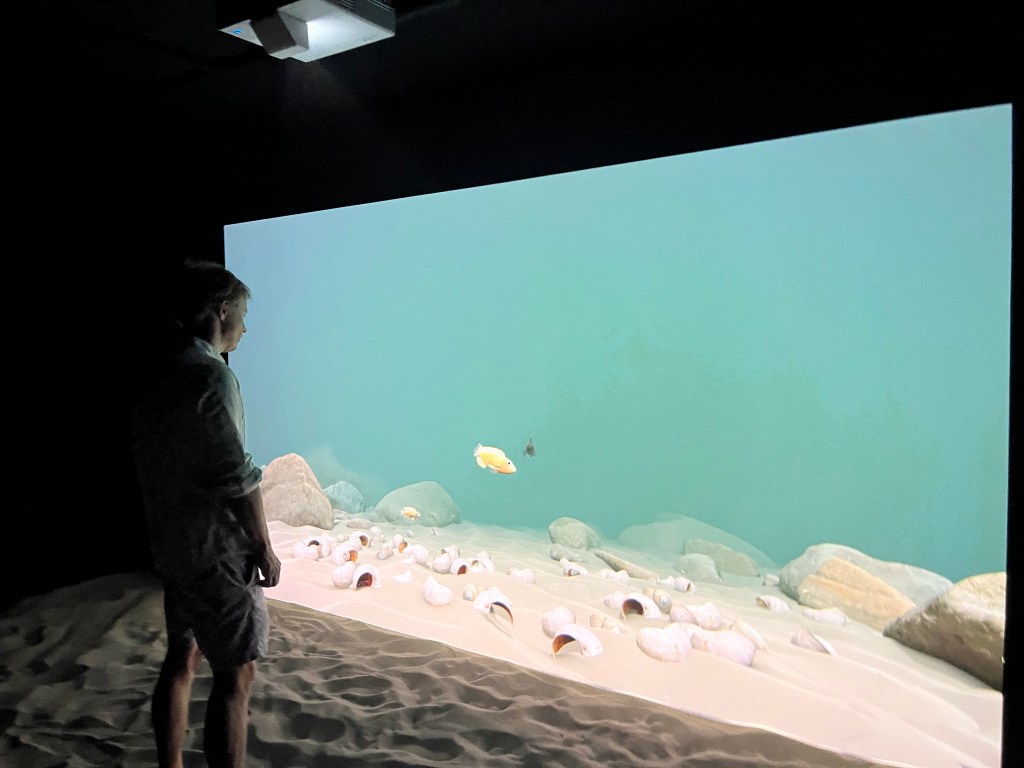
Famously, there are no scientific parameters to explain what consciousness is, or how it emerged: this is known as “the hard problem of consciousness.” But maybe this problem is only hard from humans’ point of view. All Is Water turns the tables and reflects on this problem from the perspective of non-human consciousness. Featuring a speculative text spoken and written by a computer, the film moves from meditations on the history and limits of science to an almost mystical exploration of fish consciousness.
All Is Water was filmed in Corsica during the spawning period of the Chromis chromis, when the scientists Anja Wegner and Alex Jordan set up an experiment to determine how architecture affects the social behavior of the fish. SUPERFLEX supplied three buoyant structures designed to appeal to underwater life. The local Chromis chromis population congregated around these structures in great numbers in order to spawn.
As the film goes on, the narration expands its scope from this specific experiment to ask which methods—beyond the materialism of Western science—might be useful for reimagining the hard problem of consciousness. Combining scientific speculation, architectural futurism, and AI-generated philosophy, All Is Water suggests that consciousness is not a stable category, and that humans can potentially shift their perspective in order to tune in to the needs, preferences, and spiritual life of other species.
All Is Water is supported by the Danish Arts Council. Special thanks to Anja Wegner and Alex Jordan. Soundtrack by Anders Paulin.

The exhibition Omi Libations is the result of a collaboration between the artist Tabita Rezaire, the artist-architect Yussef Agbo-Ola, and the biologists Alex Jordan and Anja Wegner from the Max Planck Institute for Animal Behavior in Konstanz.
The exhibition centers on a structure titled Omi: Yemoja Temple envisioned by the artists which is dedicated to the Yoruba Orisha Yemoja. In the pantheon of the West African Yoruba people, Yemoja is considered to be the mother spirit of rivers and oceans and all creatures living therein.
The exhibition focuses on water as the source of life. The conceptual foundation was laid by a research trip that Rezaire and Agbo-Ola undertook with the scientists. Their research took them to Zanzibar, an archipelago off the coast of Tanzania, and to Lake Tanganyika, where they studied the local water fauna including fish, corals, and micro-organisms.

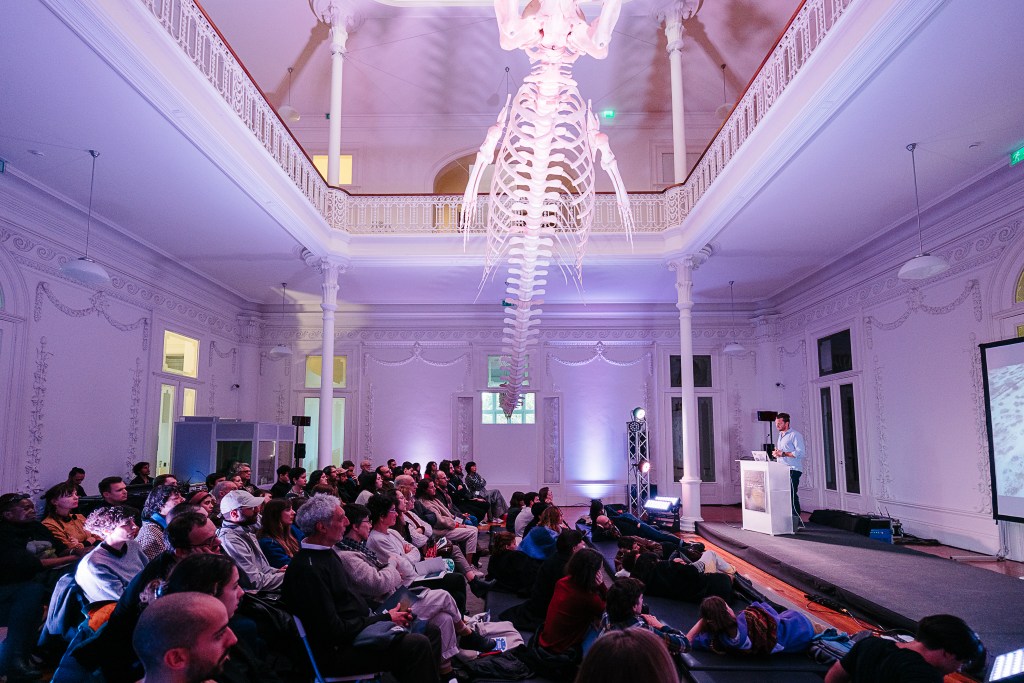
Critically referencing classic anatomy lessons—like that of Doctor Tulp, portrayed by Rembrandt in 1632 — »Dissect« is an updated theatre for the analysis and discussion of contemporary works of art and design in the presence of the works. We ought to not be talking about things, but rather with them, combining words, gestures, and objects in a public dispositif specifically designed for such an interactive process. Created by Samuel Bianchini and Emanuele Quinz at the École nationale supérieure des Arts Décoratifs (EnsAD), »Dissect« aims to restore more lively forms of exchange than the so-called »roundtable«, to spark radically multidisciplinary debates, and to grapple with the very objects of the discussion.

A collaboration led by Karmen Franinović at Zurich University of the Arts. Moved by urgent warnings from environmental sciences about the ocean facing critical ecological tipping points, the research project “Interfacing the Ocean” (ItO) aims at establishing a new perspective on design in and with the ocean. The project seeks to initiate a Sea Change in design research in collaboration with marine biology and anthropology, asking: How can design research practices in and with ocean environments support sympoetic underwater processes, foster sensitive human-marine species interactions and encourage multispecies coexistence?
WELCOME TO MY WORLD – EXPERIMENTAL ECOLOGIES
What can art contribute to environmental debates? The project Experimental Ecology unites five artists and five scientists in a transdisciplinary collaboration within the field of ecology, aiming to develop novel ways of investigating our impact on the biosphere.
In the spirit of the famous E.A.T. (Experiments in Art and Technology), which brought together artists and engineers in 1967, this current project again initiates the exchange between art and science within the ongoing discourse on our relation with the natural environment. The collaborative nature was expanded to include public in the concepts’ collaborative development during a symposium held in fall 2022. The resulting projects are now presented in an exhibition and a catalogue.
Experimental Ecology is curated by Martina Huber and Gianni Jetzer and presents five works from five collaborative teams: Sissel Tolaas x Christina Agapakis, Ingo Niermann x Alex Jordan, Michelle-Marie Letelier x Karin Pittman, Zheng Bo x Matthias Rillig, Riikka Tauriainen x Meike Vogt.
THE SHAPE OF A CIRCLE IN THE MIND OF A FISH
What is a sense of self, when beings and landscapes exist in states of co-evolution and co-habitation? What rituals and practices, including but not limited to scientific research, help us to re-evaluate how we share this planet?
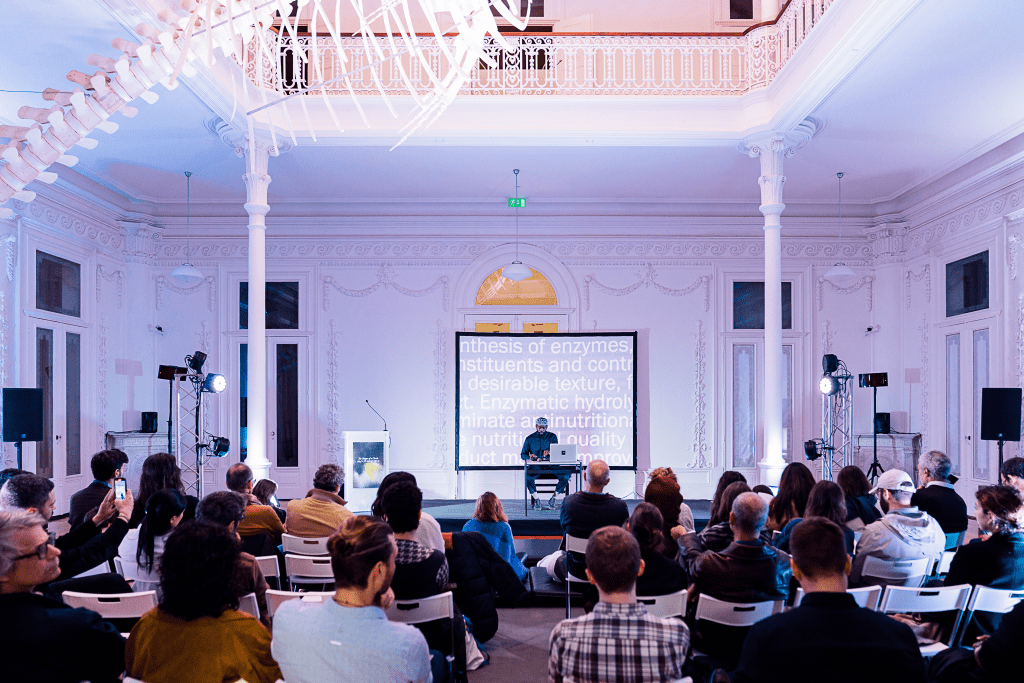
The Shape of a Circle in the Dream of a Fish considers the complex and multilayered question of dream life across species boundaries – reflecting on scientific advances in animal and plant consciousness, as well as shamanic and mystical encounters with them. Working to dissolve disciplinary binaries and encourage exchange between epistemologies, we are interested in asking questions and sharing stories that can challenge the anthropocentric paradigms that hold things in place.
Participants include: architect Yussef Agbo-Ola (Olaniyi Studio), philosopher Federico Campagna, psychologist and cognition researcher Nicola S. Clayton, artist and writer Onome Ekeh, artist and performer Cru Encarnação, behavioural ecologist Alex Jordan, religious historian Sophie Lunn-Rockliffe, artist and musician Nahum Mantra, vocal performer Hatis Noit, artist Giles Round, and artist and architect Rain Wu.
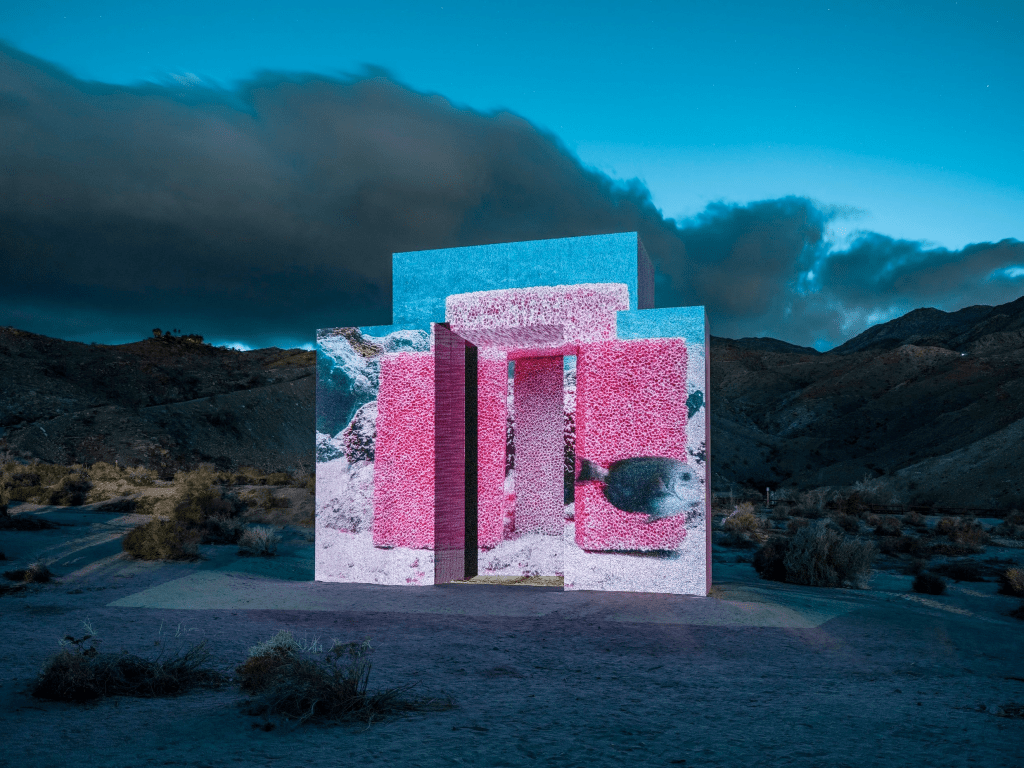
In anticipation of a future altered by climate change, we must prepare our environment for a migration of the sea onto land. Dive-In is an encounter across time, elements, and species, constructing an architectural vocabulary fit for a new era of submersion – an era of fish.
A meeting point between the present and a subaquatic future, Dive-In is an architectural installation that functions as a drive-in cinema for humans, and will become infrastructure for marine life when sea levels rise. In collaboration with Dr. Alex Jordan, expert in the behaviour of fish, several structures were tested in order to identify the architectural preferences of marine creatures, one of which is the colour pink, which attracts coral polyps and facilitates biodiversity. Scenes of fish interacting with prototypes of these structures are projected onto the façades of the structure, inviting human viewers to encounter marine life interpersonally. Dive-In was originallly installed in Palm Springs in the context of Desert X. Watch the video here.
The deep sea is closer than ever. Global warming is causing an unprecedented rise in the sea level, which will drastically reshape our planet. Dry ecosystems, including human landscapes, will soon be submerged. Great migrations will happen, and all species will be forced to survive extreme changes in their habitats. As the water rises, molluscs, fish and algae will occupy our cities, homes and parking lots. Every object created by humans will potentially end up underwater: cars, televisions, fish bowls. When the depths of the sea finally reach the places that we have carefully designed and built, their original function and aesthetics will be lost. It is time to consider if water will then become a destructive force or an element of transformation. Apart from continuing to fight the causes of climate change, we should also prepare for the inevitable arrival of the ocean.
Deep Sea Minding is a project by SUPERFLEX that merges artistic and scientific research in an attempt to reach an alternative understanding of the marine species, which could ultimately affect the way we imagine and design our environments and objects. While generating relevant data and increasing awareness of rising sea levels, Deep Sea Minding proposes the creation of structures that could serve the needs and desires of both humans and marine creatures. In August, SUPERFLEX initiates the first of three expeditions to the South Pacific to test marine life responses to the nature of these designed structures. Documentation of the progress of this research will be accessible online and interaction with the project possible through the land-based annual Convenings.
Deep Sea Minding is a three-year transdisciplinary research project conceived by the Danish artist group SUPERFLEX and commissioned by TBA21–Academy. SUPERFLEX will be Expedition Leaders of the second cycle—spanning 2018-20—of TBA21–Academy’s three-year fellowship programme The Current. The first expedition—Deep Sea Minding—aboard the M/Y Dardanella research vessel, brings a series of exploratory experiments to the uninhabited island of Hunga Tonga-Hunga Ha’apai, in the South Pacific. The island of Hunga Tonga-Hunga Ha’apai emerged recently in the South Pacific, challenging the prevailing tendency of a world which is slowly sinking. The perfect location to explore the thin and ever-changing frontier between land and sea. A frontier which will be soon diluted by a vertical migration: bringing fish to occupy our homes and humans to mind the deep sea.
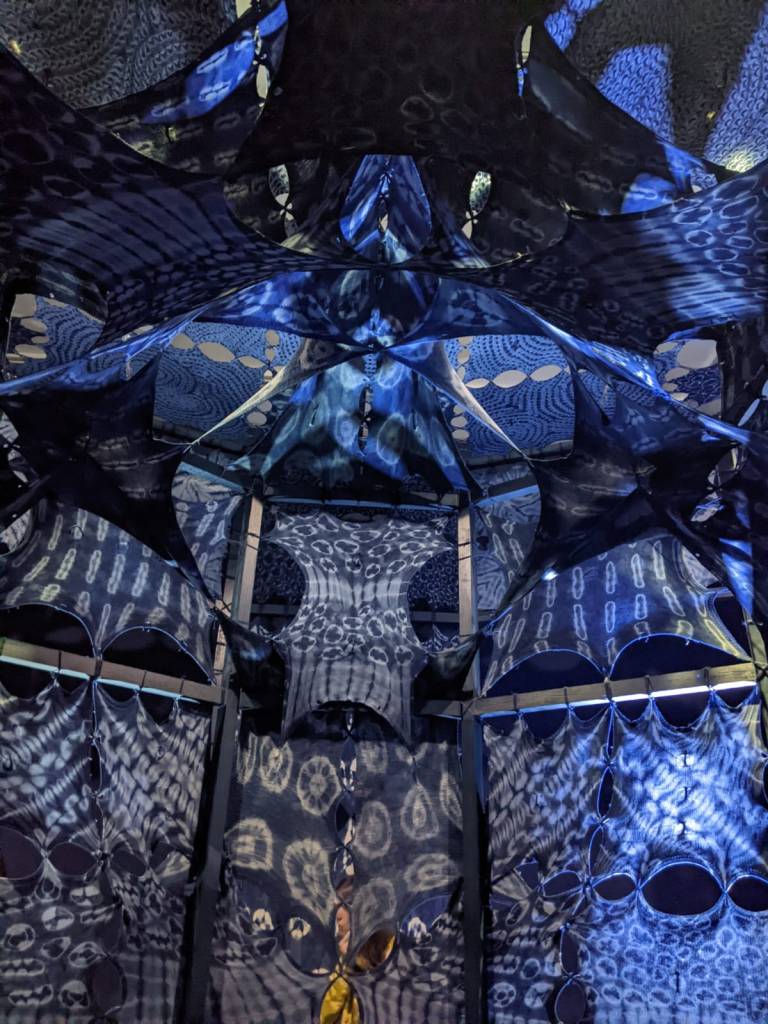
The project “Common Ground”, initiated by the Ernst Schering Stiftung in 2021, aims to support scientific institutions with an interest in transdisciplinary debate. The result should lead to an exhibition shown at the Schering Stiftung.
Dr Alex Jordan, who leads an independent research group based at the Max Planck Institute of Animal Behavior in Konstanz, and Anja Wegner, a doctoral student at the same institute, focus their research on the social behavior of fish. Their work explores the space between humans and animals in the aquatic realm, posing questions of shared aesthetics, co-creation, and architecture. They work towards a more-than-human perspective in their ecological practice and research, advocating for an inclusion of artistic perspectives for an expansion of the traditionally quantitative approach of behavioral ecology.
CREATORS FACING THE CLIMATE EMERGENCY
For the 4th season of “Créateurs Urgence Climat” (October 2023 – May 2024), the Foundation is inviting curator and art historian Chus Martínez and scientist Alex Jordan to discuss animal behaviour and non-human aesthetics in the face of the ecological challenge.
Created in 2020 by the Fondation Thalie, this series of conversations between artists, designers and scientists committed to a post-carbon society aims to pass on new thinking and knowledge to inspire a whole new generation of creators, to invent imaginaries of transition, and to design and implement new ways of producing in the light of depleting natural resources. The great ecological challenge of our time.
How does our perception work? Which senses do we have in common with animals, plants or even single-celled organisms? How can we change, expand, improve or even discover new senses for us? During the Corona pandemic, many people experienced first-hand how strongly the loss of taste and smell, or the restriction of human communication affected our lives.
The BIOTOPIA Festival “SENSE” explores the sensory world in the context of science and society. At the interface of bio- and neuroscience, art and design, the festival brings the world of perception to life in a variety of formats: a diverse stage program, exhibitions, talks, demonstrations and work- stores, hands-on science, live performances as well as exciting hands-on activities invite curious people of all ages to get active, discuss, ask questions and get answers.
The objective of the conference is to imagine how the places where research takes place shall be in the future to empower scientists, promote ground-breaking discoveries and actively engage with society. Members and leaders of the scientific community, as well as policy makers, are invited to join the event.
THE SPIDER/WEB PAVILION 7: ORACLE READINGS, WEAVING ARACHNOMANCY, SYNANTHROPIC FUTURES
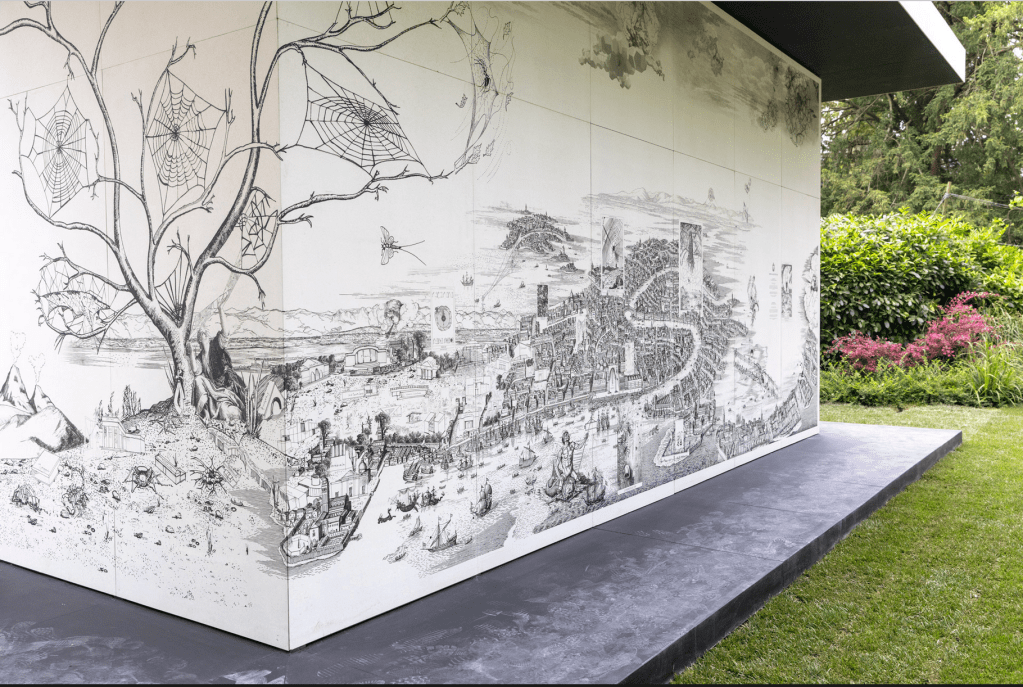
The Spider/Web Pavilion 7: Oracle Readings, Weaving Arachnomancy, Synanthropic Futures: At-ten(t)sion to invertebrate rights!, in the Giardini, presents a nonhuman pavilion. Transcending national representation it claims the rights and presence of invertebrates, spiders included, at the Biennale Arte 2019. Spider/Web Pavilion 7 echoes spider divination methods practised in different parts of the world and celebrate the ability to forecast meteorological events, or extraordinary ones, through the observation of other species’ behaviour. Inviting our senses to expand towards new forms of embodied cognition, Spider/Web Pavilion 7 attunes to a non-verbal language that amplifies our response-ability to each other. Its floor shakes at very low frequencies, at the rhythm of vibrating spider/webs, inaudible and yet sensible for the voices we might need to hear.
“ON AIR LIVE WITH…” : ARACHNOSOPHY

Related to Tomás Saraceno’s exhibition at the Palais de Tokyo, this symposium brings together thinkers from various disciplines—arachnologists, biologists, historians and philosophers of science and media, composers— to think with, about and near spiders and their webs. It considers the actual spiders around us—their bodies, cognitive and perceptive realms—as well as the ways knowledge about these animals has been produced, shared, and how this knowledge has triggered further investigations and inspired other areas of research – such as Tomás Saraceno’s experiments with spider web hybridities, or with possibilities for interspecies communication. Simultaneously, the symposium explores the symbolic and affective dimensions of how we look at spiders, and how, by paying renewed attention to them, we might discover new threads of connectivity.
EVERYBODY TALKS ABOUT THE WEATHER

“Everybody Talks About the Weather − Public Program” is a two-day symposium taking place at Fondazione Prada’s Venetian venue, the historic Palazzo Ca’ Corner della Regina. Organized in collaboration with THE NEW INSTITUTE Centre For Environmental Humanities (NICHE) at Ca’ Foscari University of Venice, it investigates the topics and complex questions related to the global environmental emergencies arise in the research exhibition “Everybody Talks About the Weather”, curated by Dieter Roelstraete and including scientific spotlights developed in collaboration with NICHE.
 The Behavioural Evolution Lab