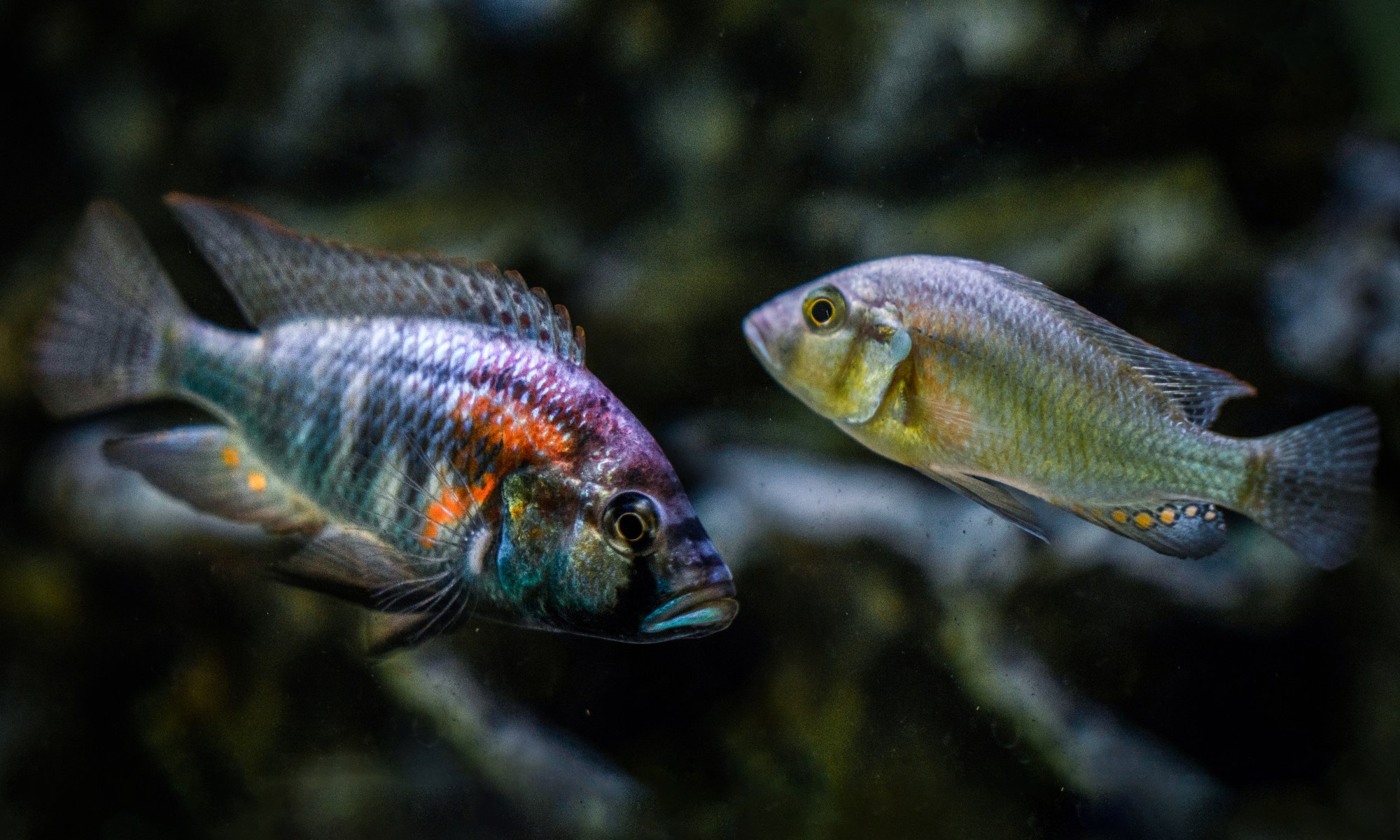
Behaviour is an ephemeral phenomenon, and to get a handle on how behaviour evolves we must study the structures that produce it. To that end, we focus on understanding the diversity of neuroanatomy and brain activity in species and individuals that vary in their social behaviour. We have successfully created a link between field observations of behaviour in natural settings and analyses of brain gene activity in the lab.
Here are some papers on brain and behaviour:
Ma B, Li W, Song Z, Fischer S, Lein E, Jungwirth A, A Jordan. 2025 Multiple within species comparisons show Tanganyikan cichlid fish have larger brains in less structurally complex habitats. bioRxiv 2024.12.06.627222
Ma B, Dunster B, Lein E, Zhu B, Li W, Goverts Z, A Jordan. 2025. Population comparisons reveal more social interactions are correlated with larger brains in the Lake Tanganyikan cichlid Neolamprologus brevis. bioRxiv 2024.12.17.627543
Rodriguez-Santiago M, Jordan A, Hofmann HA. 2022. Neural activity patterns differ between learning contexts in a social fish. Proceedings of the Royal Society B. 04 May 2022 https://doi.org/10.1098/rspb.2022.0135.
Maguire SM, DeAngelis R, Dijkstra PD, Jordan A, Hofmann HA. 2021. Social network dynamics predict hormone levels and behavior in a highly social cichlid fish. Hormones and Behavior Volume 132, June 2021, 104994
Rodriguez-Santiago M*, Nuehrenberg P* Derry J, Deussen O, Francisco F, Garrison LK, Garza SF, Hofmann A, Jordan A. 2020. Behavioral traits that define social dominance are the same that reduce social influence in a consensus task. Proceedings of the National Academy of Sciences (31) 18566-18573. *co-first authors
 The Behavioural Evolution Lab